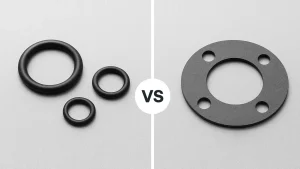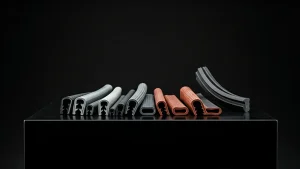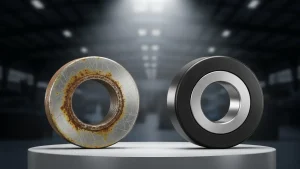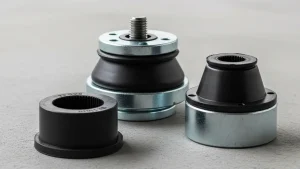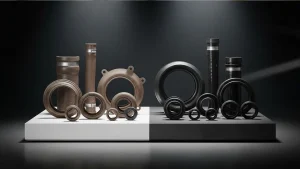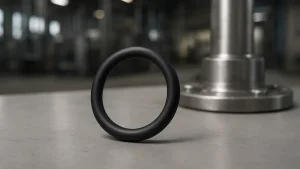
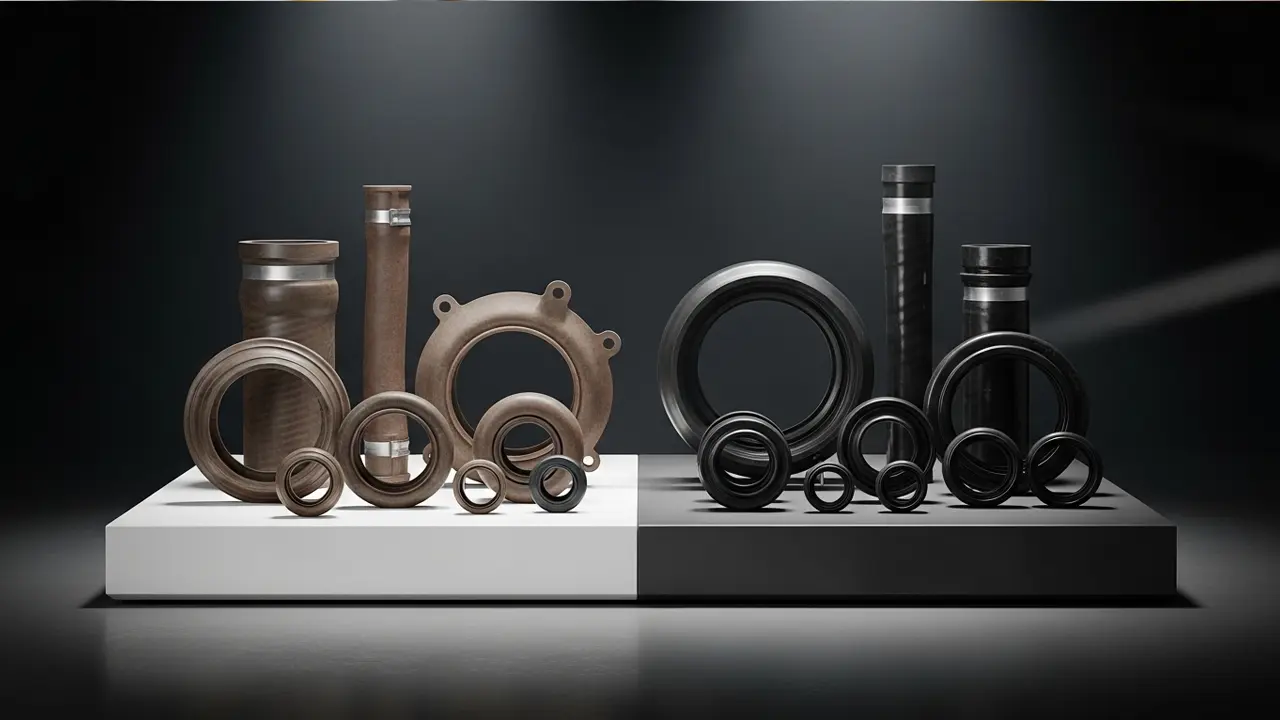
In the production of industrial rubber components at Rubberex, such as O-rings, gaskets, and vibration dampers, the choice of rubber directly affects the durability, performance, and safety of equipment. The two main categories of rubber used are Natural Rubber (NR) and Synthetic Rubber, each with distinct properties and applications.
Natural Rubber is derived from the sap of rubber trees and is highly valued for its flexibility, elasticity, and mechanical strength. It is ideal for components that require rapid return to their original shape and high resilience. While natural rubber offers good wear resistance, it is more sensitive to oils and certain chemicals.
Synthetic Rubber, on the other hand, includes types such as NBR (Nitrile Butadiene Rubber), EPDM, Viton, and Neoprene, each designed to withstand specific conditions. For instance, NBR is resistant to oils and fuels, EPDM excels in heat and water resistance, and Viton withstands extreme chemicals and high temperatures. Using synthetic rubber for industrial components enhances lifespan and reduces maintenance costs.
Physical properties such as elasticity, thermal resistance, dimensional stability, and chemical resistance ensure that components made from either natural or synthetic rubber perform reliably even under high pressure and temperature. At Rubberex, engineers carefully select the appropriate rubber type for each application to guarantee optimal performance in industries such as oil and gas, petrochemicals, automotive, and heavy machinery.
Ultimately, combining technical expertise, high-quality materials, and multi-stage quality control ensures flawless performance and long-lasting durability. Choosing between natural and synthetic rubber based on operational conditions and media is one of the most critical engineering decisions in industrial component design.