


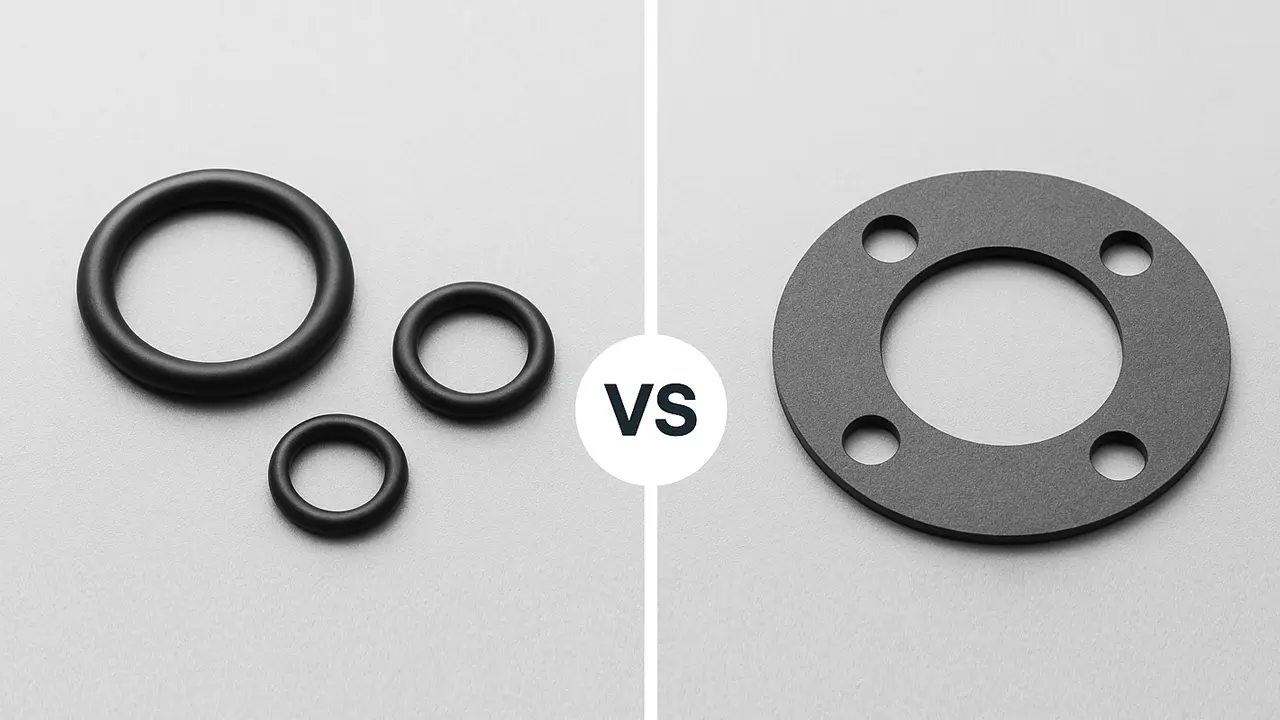
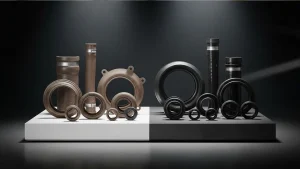
At the heart of every mechanical system handling fluids or gases lies a critical sealing component designed to prevent leaks. Two of the most common and essential sealing elements are O-Rings and Gaskets. While both aim to stop leakage, their operating mechanisms, applications, and working environments differ significantly. Understanding these differences is essential for any engineer or technician working with pressurized systems.
O-Rings: The Dynamic Sealing Champion
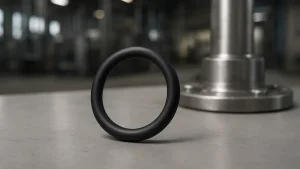
O-Rings are circular cross-section rings that primarily operate on the principle of controlled compression. They must fit precisely into a well-engineered groove. When two mating surfaces compress the O-Ring, it deforms to create a sealing force, which is further enhanced as fluid pressure increases. The major advantage of O-Rings is their suitability for dynamic applications, such as rotating shafts or reciprocating pistons in hydraulic and pneumatic cylinders. Thanks to their simple structure and variety of materials (e.g., NBR, FKM, Silicone), O-Rings provide a cost-effective and reliable solution for high-pressure sealing.
Gaskets: The Foundation of Static Sealing
Gaskets are typically flat sheets or more complex pre-formed shapes, cut or molded for static sealing, especially in flanges and cylinder heads. They fill small gaps and surface irregularities between two metal surfaces. Gasket sealing relies on axial compression, determined by the torque applied through bolts. Available in polymers, rubbers (like EPDM), PTFE, and composite or metallic materials, gaskets are designed for extreme temperatures and pressures. They are widely used in sealing large-diameter pipes and tanks.
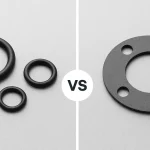
Key Engineering Differences
Motion Type: O-Rings suit dynamic and static sealing; gaskets are almost exclusively for static sealing.
Sealing Mechanism: O-Rings use radial deformation and fluid pressure; gaskets rely on axial compression to fill gaps.
Space Requirements: O-Rings need a precise groove; gaskets sit between two large, flat surfaces (e.g., flanges).
Choosing between them depends not only on the required sealing type (dynamic vs. static) but also on space constraints, system pressure, and manufacturing tolerances.
For expert technical advice on selecting and supplying specialized sealing solutions—including O-Rings, gaskets, mechanical seals, and custom polymer components that meet the highest industrial standards—visit rubberex.co.

مطلب عالی بود